
Every cleanroom eventually needs to move something across its boundary—a component, a document, a sample, or a person—and each transfer is a potential entry point for contamination if it is not controlled. Pass boxes and air showers manage that moment, letting material and people cross from an uncontrolled or lower-classification area into a cleanroom without compromising the room's pressure differential or particle count.
Skan Inc supplies pass boxes and air showers as standalone units and as part of larger cleanroom and modular OT projects, sized and configured against the classification of the rooms they connect and the traffic passing through them.
Select a tab below to explore the available products
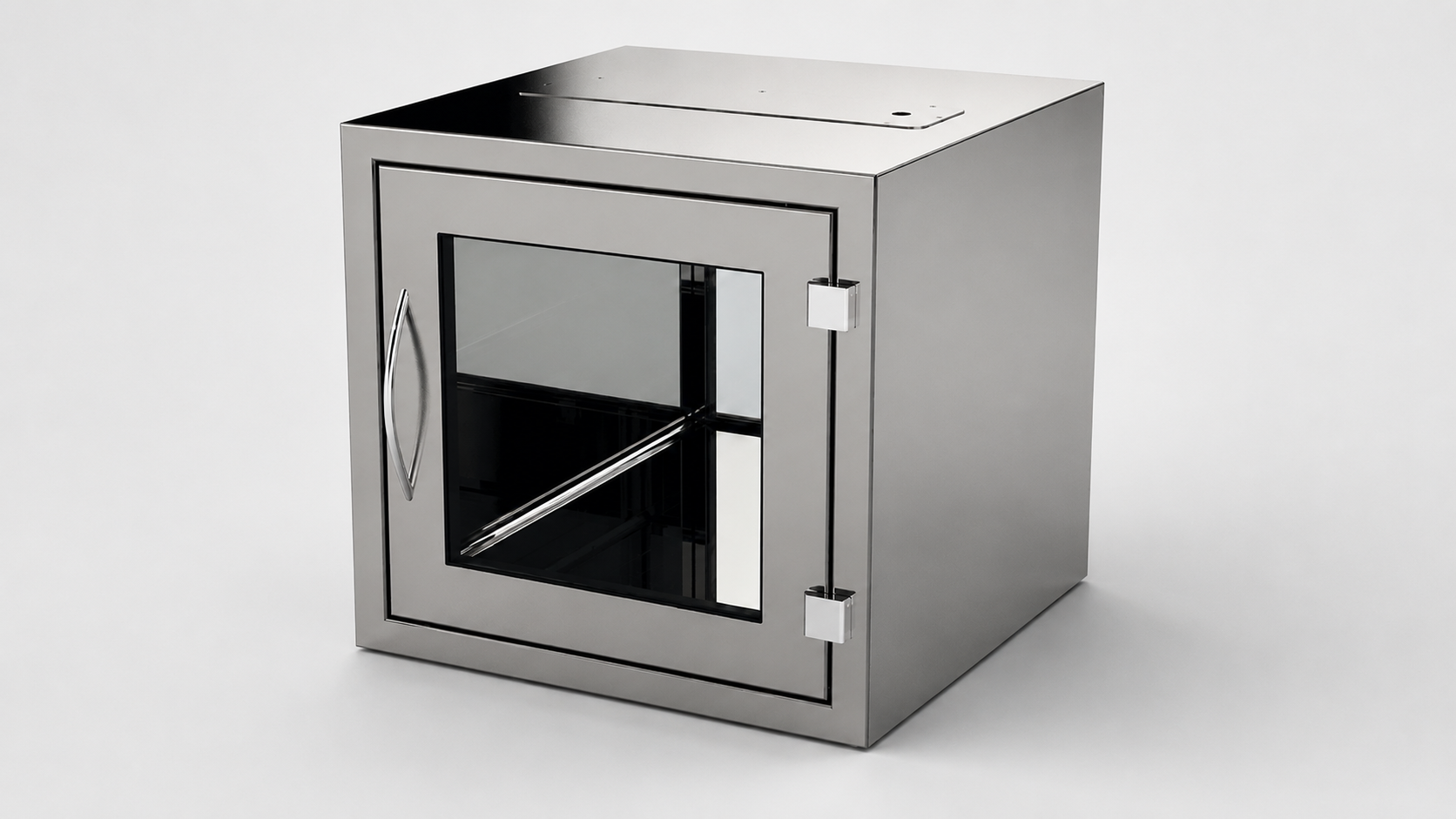
A pass box is a two-door transfer chamber built into the wall between two spaces. Regardless of type, the core function is the same: the two doors can never be open at once, so the box never creates a direct, uncontrolled air path between the rooms it connects.
| Type | Mechanism | Specified When |
|---|---|---|
| Static | Electromagnetic interlock, no active air treatment | Controlling cross-contamination between rooms of different classification is the only requirement |
| Dynamic | Interlock plus HEPA filter and motor-driven blower, actively filtering air inside the chamber | There is a larger classification gap between rooms, or the material itself needs active air cleaning during transfer |
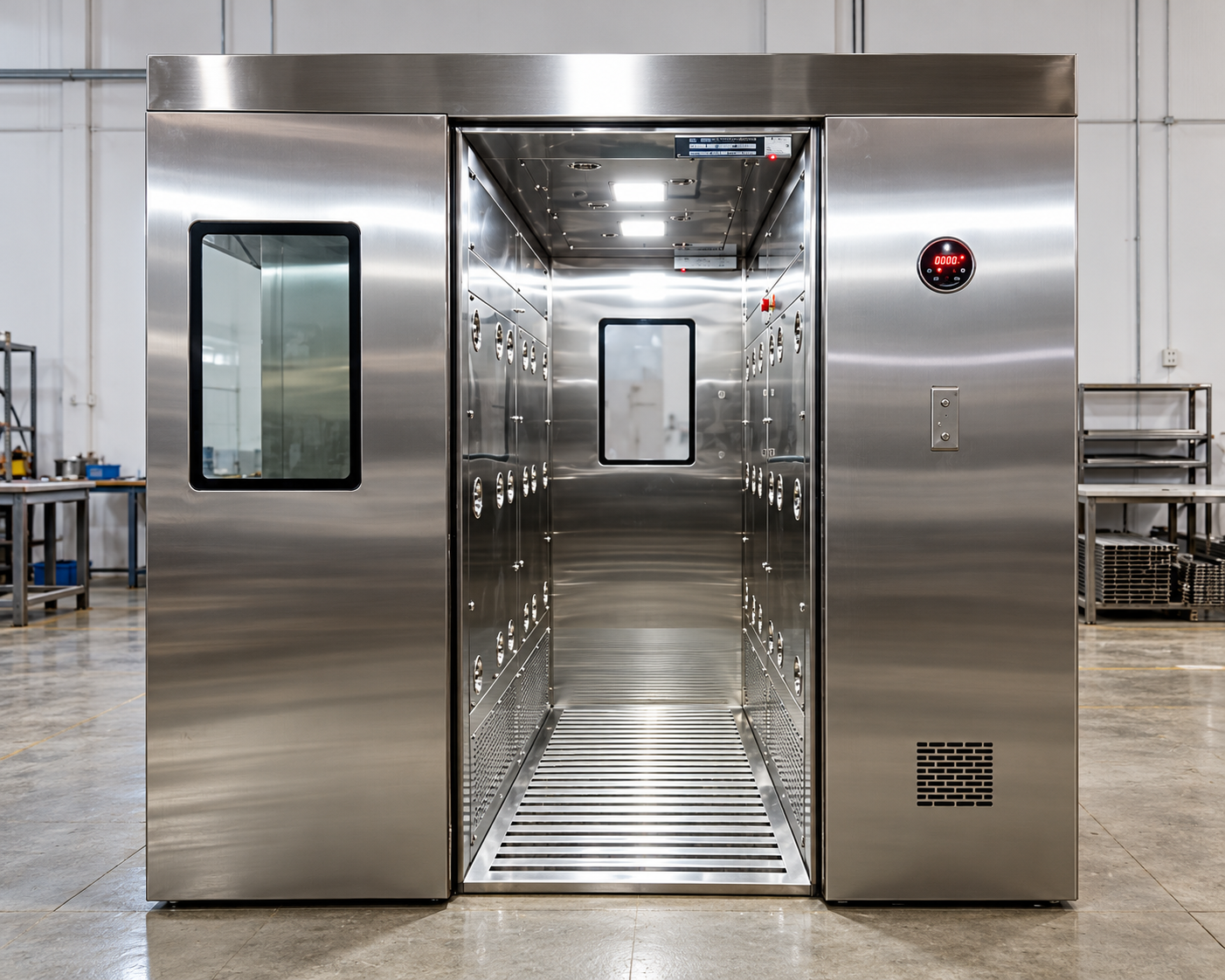
Gowning alone does not fully solve surface contamination. Loose particles and fibres can cling to the outside of a gown, or to equipment being wheeled in, even when garment protocol is followed correctly. Air showers and tunnels strip that contamination off at the last point of entry using high-velocity HEPA-filtered air jets, rather than letting it travel into the room.
| Type | Used For |
|---|---|
| Air shower | Personnel and smaller trolleys; high-velocity HEPA-filtered jets strip loose particles before entry |
| Air tunnel | Equipment, trolleys, or larger volumes of material needing the same particle-removal step |
Both systems are interlocked in the same way as pass boxes: the entry and exit doors cannot open simultaneously, preserving the pressure boundary of the room they lead into.
Static is sufficient where the goal is simply preventing cross-contamination between two rooms of different classification. Dynamic is worth the added cost where the classification gap is larger, or the material itself needs active air filtering during the transfer, not just isolation.
An air shower covers personnel and smaller trolleys. An air tunnel is sized for equipment or larger volumes of material that need the same particle-removal step before entering the cleanroom or OT complex.
Gowning protects against contamination coming from the person; it does not remove particles that have already settled on the outside of the gown itself before entering the cleanroom. The air shower handles that last step.