
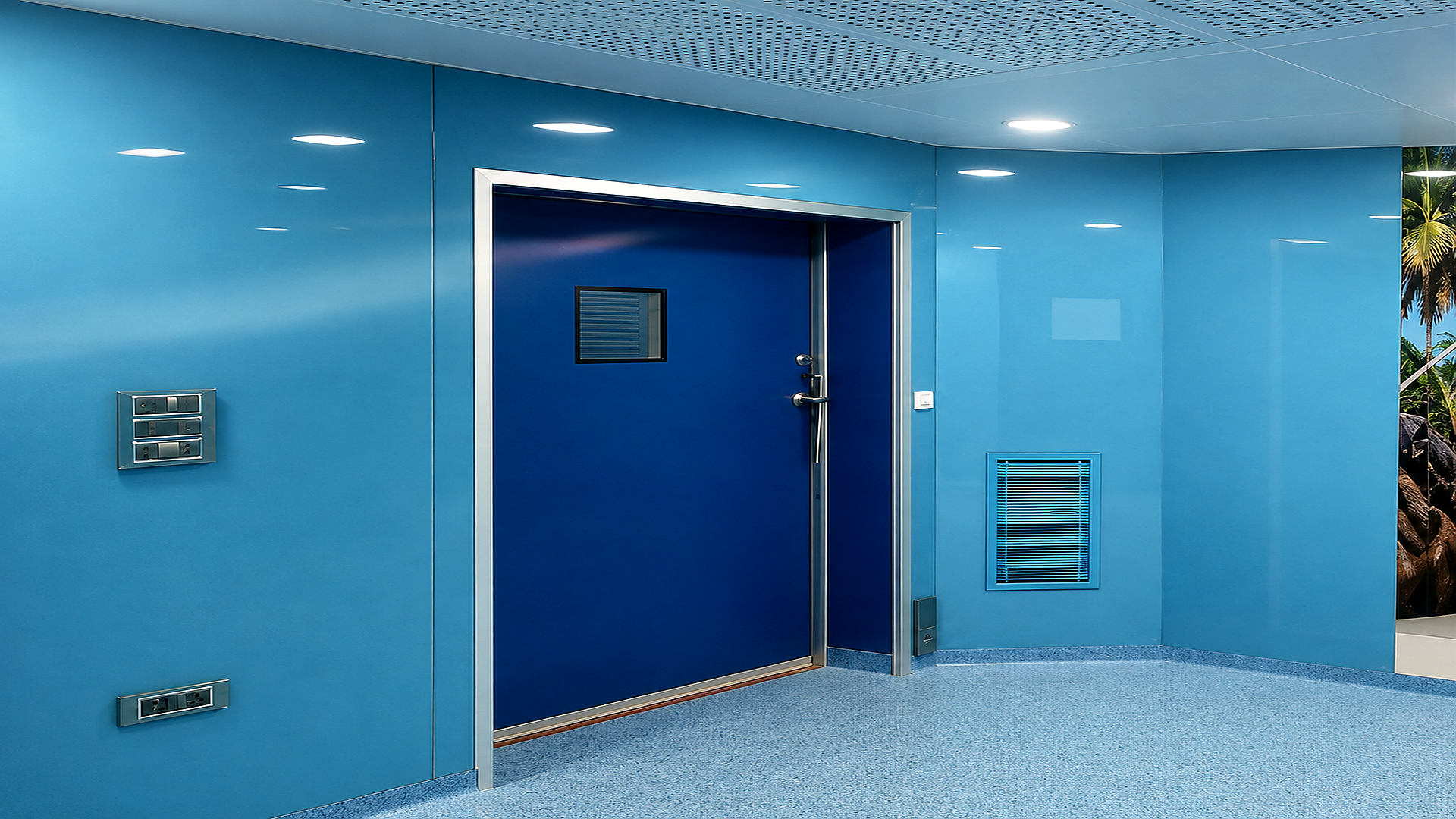
Doors are one of the most heavily used and most overlooked components of a cleanroom or OT. A wall panel is installed once and rarely touched again; a door cycles hundreds of times a day, and every cycle is a chance for particle ingress, pressure loss, or seal wear. Leaf material, frame detailing, seal type, and operating mechanism all determine how well the opening holds its classification over years of use, not just on installation day. Skan Inc provides cleanroom doors from standard single leaf swing doors for general pharma and industrial cleanrooms to specialised systems for modular OTs, radiology areas, and ICUs. Selection is driven by room function, traffic, whether hands-free operation is required, and, in some cases, regulatory requirements specific to the application, such as radiation shielding.
| Door Type | Hands-Free | Seal Level | Typical Use |
|---|---|---|---|
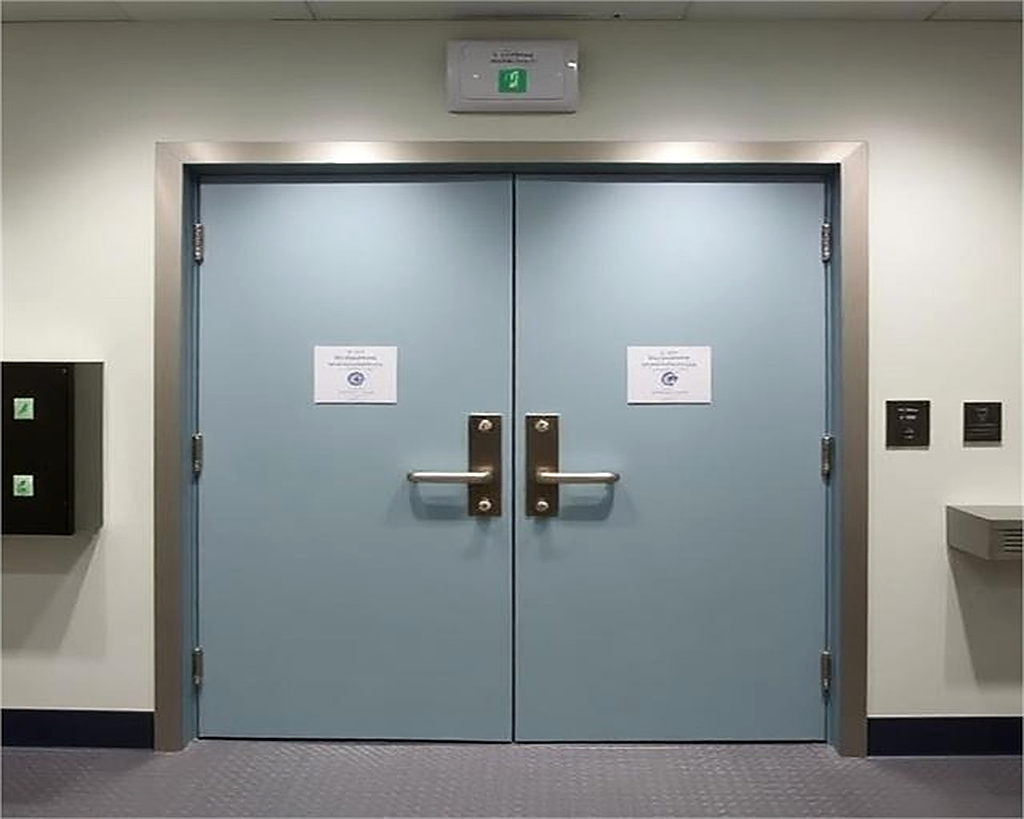
| Single Leaf Swing | Available | Gasket | Standard cleanroom entries, airlocks, labs, CSSD |
| Double Leaf Swing | Available | Gasket | Equipment/trolley/bed transfer, larger openings |
| Hermetic OT Door | Available | Full compression seal | OT entries, sterile field boundaries |
| Sensor Sliding Door | Available | Full compression seal | Corridors, non-critical transitions |
| Lead-Lined Door | Not Available | Radiation shielding | Radiology, radiotherapy, nuclear medicine, cathlab |
| ICU Glass Sliding Door | Optional | Standard | ICU rooms needing visual monitoring |
Select a tab below to explore the available products
Swing doors are the standard for most cleanroom and pharmaceutical applications: simple, reliable, and easier to seal effectively than sliding mechanisms. A gasket seal around the frame maintains the pressure differential between adjoining rooms, a basic requirement wherever airflow direction matters.
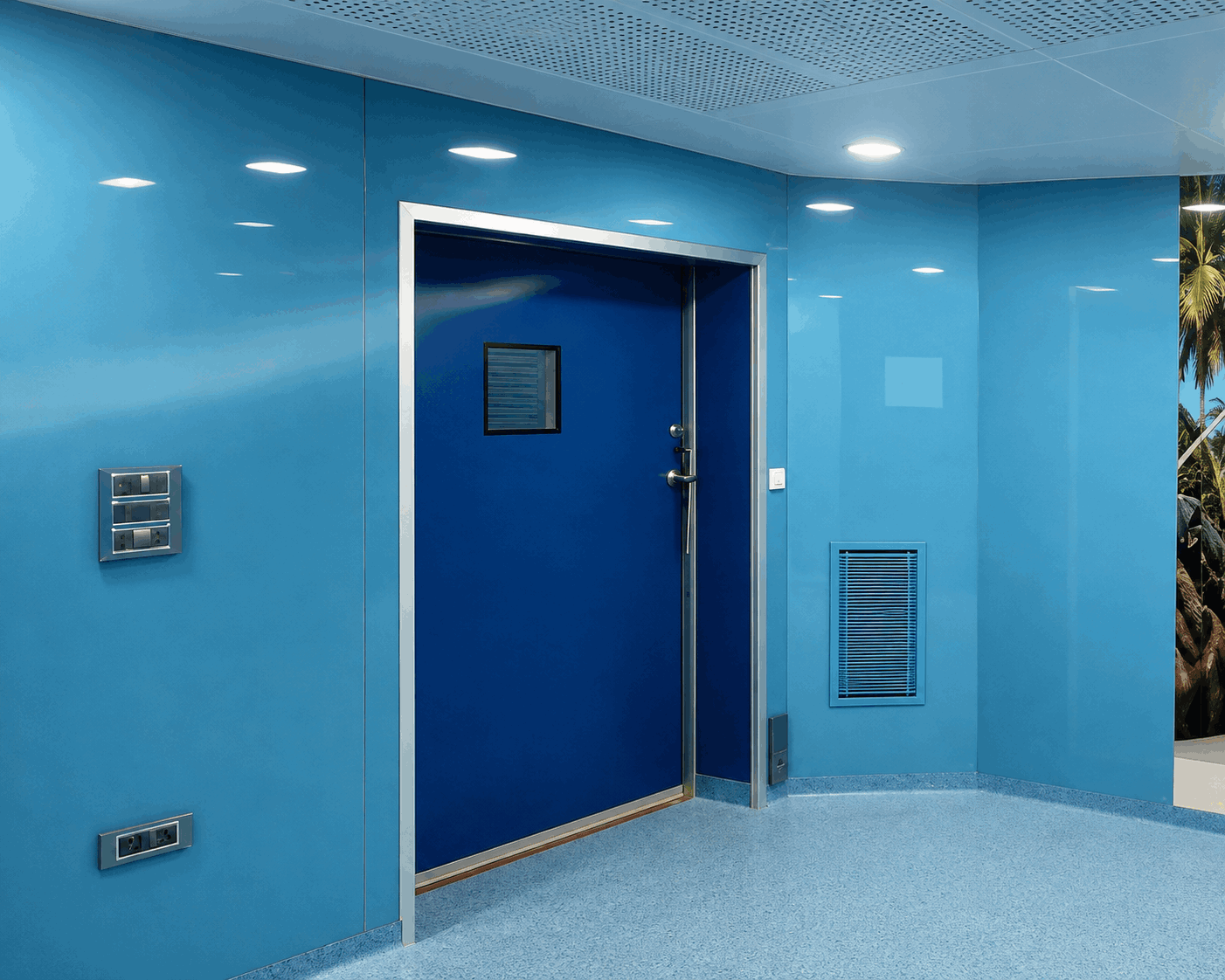
Standard specification for most cleanroom openings: manufacturing rooms, airlocks, general labs. Leaf built as a sandwich panel, matching the wall panels around it, so the door isn't the weak point in an otherwise sealed, insulated room. Used wherever traffic and equipment/personnel size don't require a wider opening.
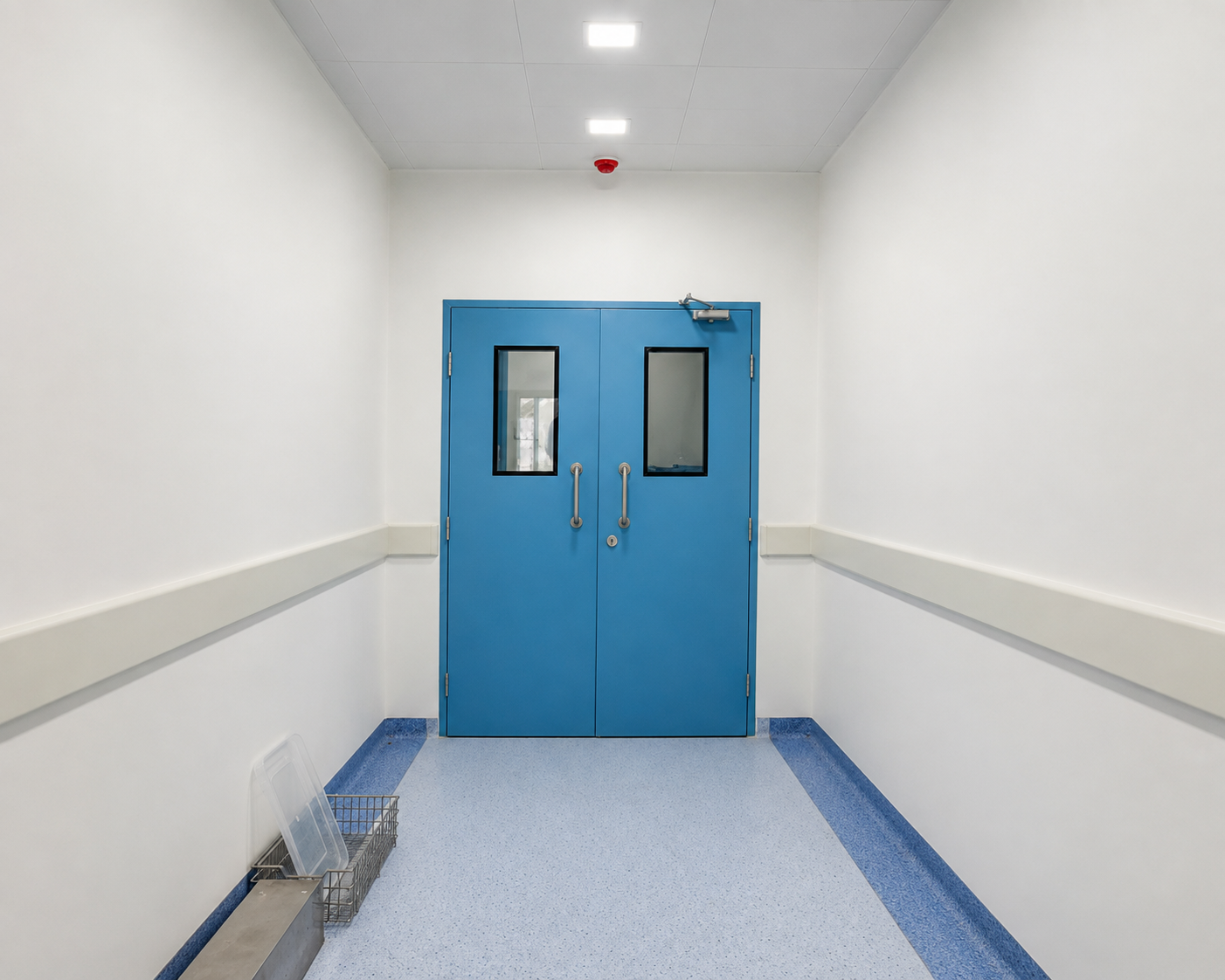
Wider clear opening for equipment, trolleys, or hospital beds. Used at material transfer points and entrances to larger cleanrooms or OT complexes. Active/passive leaf convention: the passive leaf stays closed in normal use, opening only when full width is needed, preserving seal integrity for routine traffic
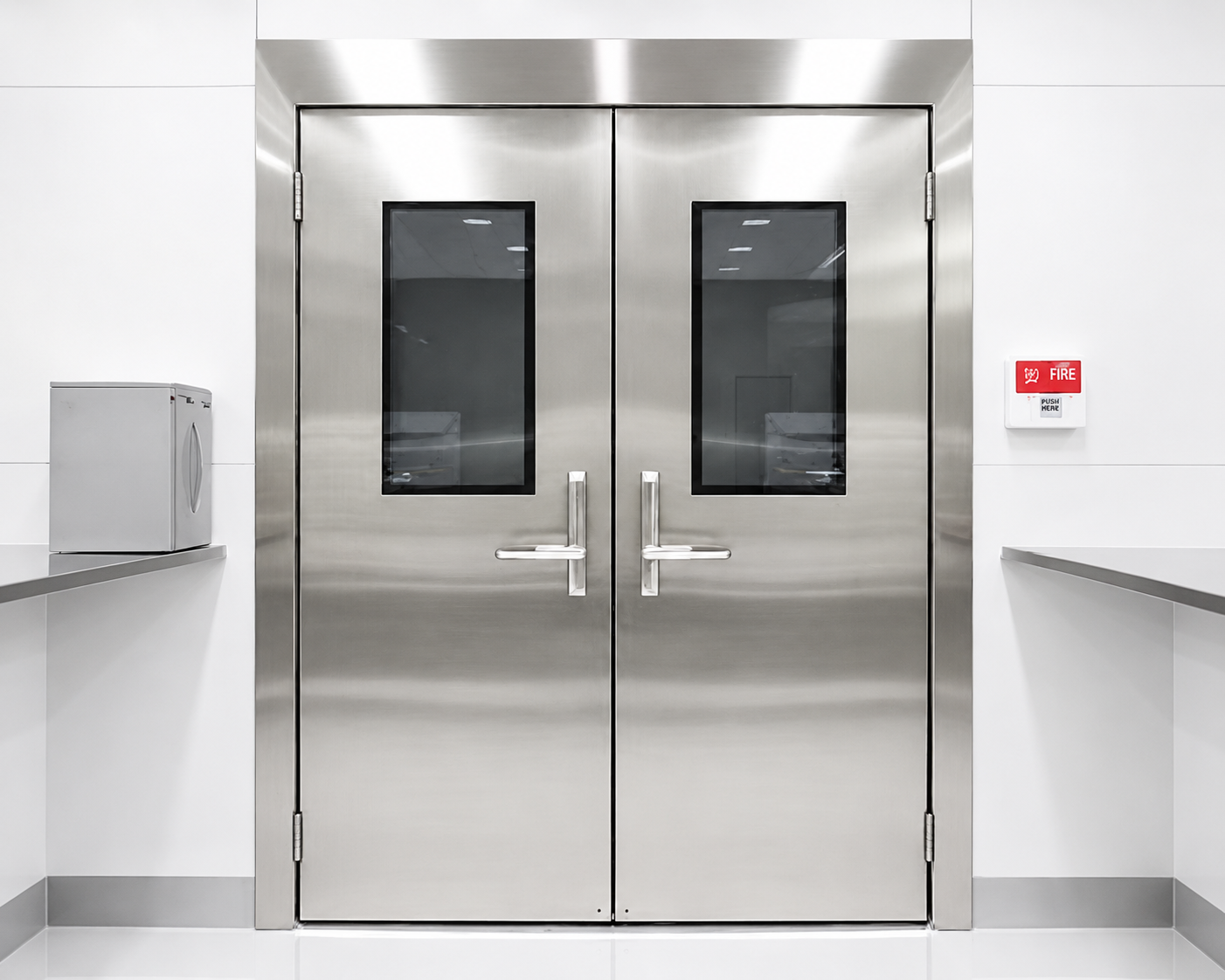
Stainless steel 304 finish in place of painted or laminate surfaces. Specified for frequent washdown, corrosive cleaning agents, or higher hygiene requirements. Common in wet-process pharma areas, CSSD, and zones adjoining autoclave rooms
Certain rooms need a different door type altogether, either because hygiene requirements make hands-free operation necessary, or because the application carries a specific regulatory or functional demand a standard swing door cannot meet.
Full compression seal around thSingle Leaf Cleanroom Doorse frame, beyond what a gasketed swing door provides. Protects the OT's pressure cascade, where even small air leakage at the door can let contaminated air reach the sterile field. Automatic version preferred in modularOT settings, since it lets staff move between rooms without touching the door, important when hand contact needs to be minimised.
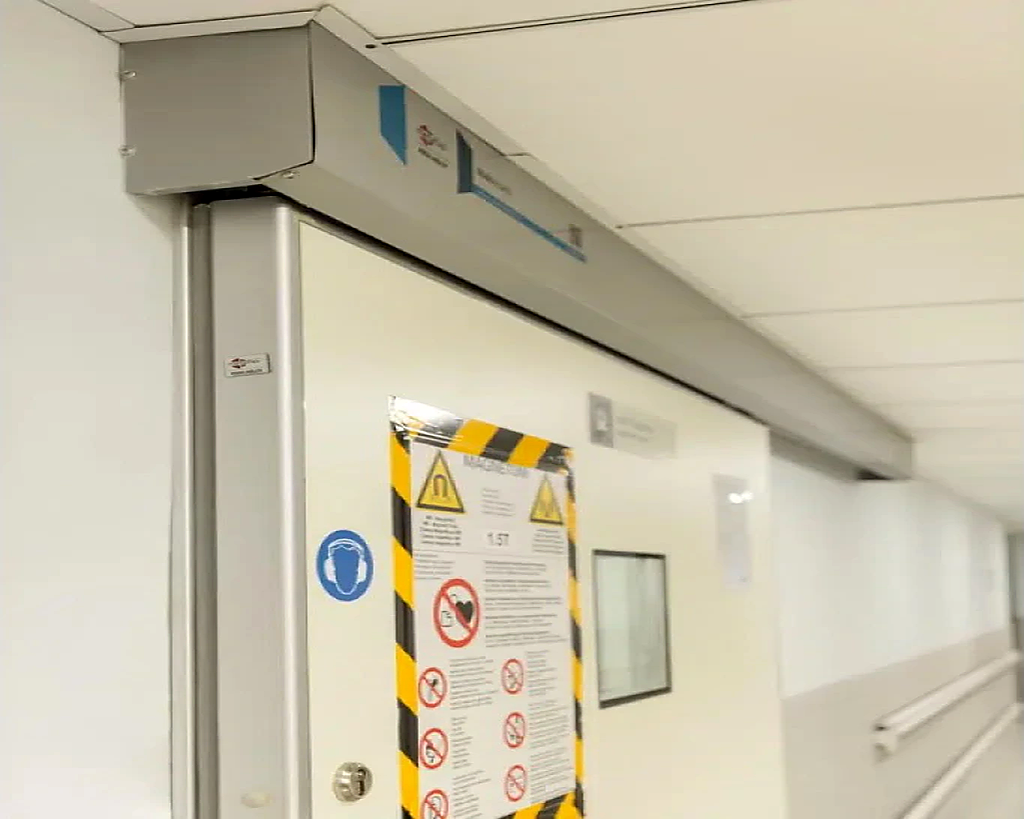
Motion or proximity sensors for hands-free operation. Used where hands-free movement matters but a full hermetic seal isn't the primary requirement. Typical in general hospital corridors and non-critical cleanroom transitions.
Shielding layer, typically lead, contains radiation within the room during operation. Required shielding level is determined by the equipment type and output inside the room. Specified as part of the facility's radiation safety design, in line with AERB requirements. Lead equivalence varies by application and is confirmed against the specific room and equipment during project planning, not supplied as a fixed standard specification mainly usefull in catahlabs and radiology centers.
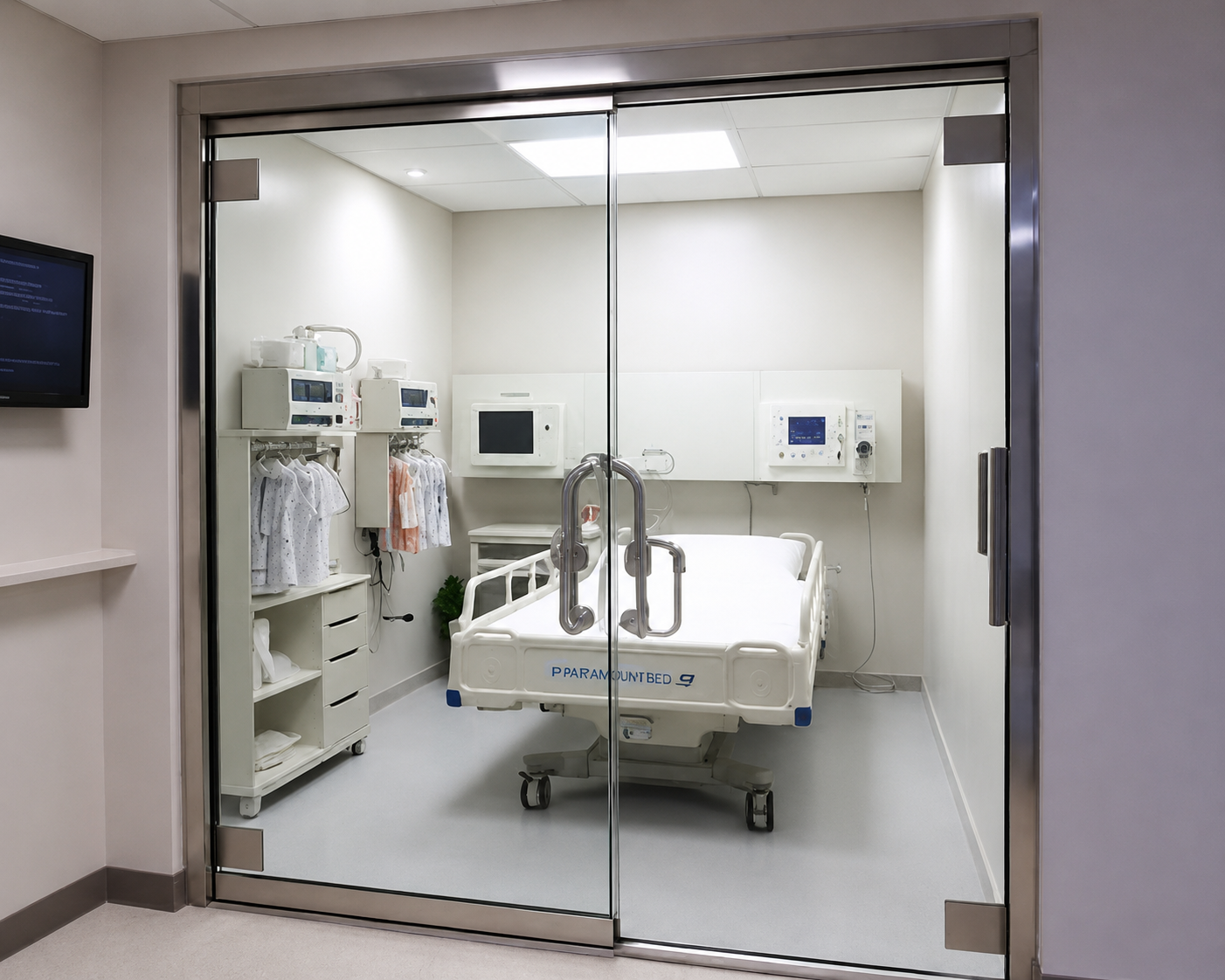
Glass panel allows visual monitoring from the nursing station or corridor without entering the room. Supports frequent patient observation in ICU settings without unnecessary door traffic. Sliding and sealing specification follows the same considerations as other cleanroom sliding doors, adapted for visibility.
Swing doors are the default for most cleanroom and pharma openings, since they seal more reliably and cost less. Sliding or hermetic doors are worth the added cost specifically where hands-free operation or a stronger seal is a functional requirement, such as OT entries or high-traffic corridors.
Yes, in practice. The modular OT'spressure cascade an OT depends on to keep contaminated air out of the sterile field is only as good as its weakest seal, and a standard gasketed swing door is more prone to leakage at the frame than a compression-sealed hermetic door.
It depends on the type and output of the equipment in the room and is set by the facility's radiation safety design. This is confirmed project by project rather than fixed as a standard specification.
Yes. They can be specified with the same sliding and sensor mechanisms used elsewhere in the facility, with the glass panel added for visual monitoring.