
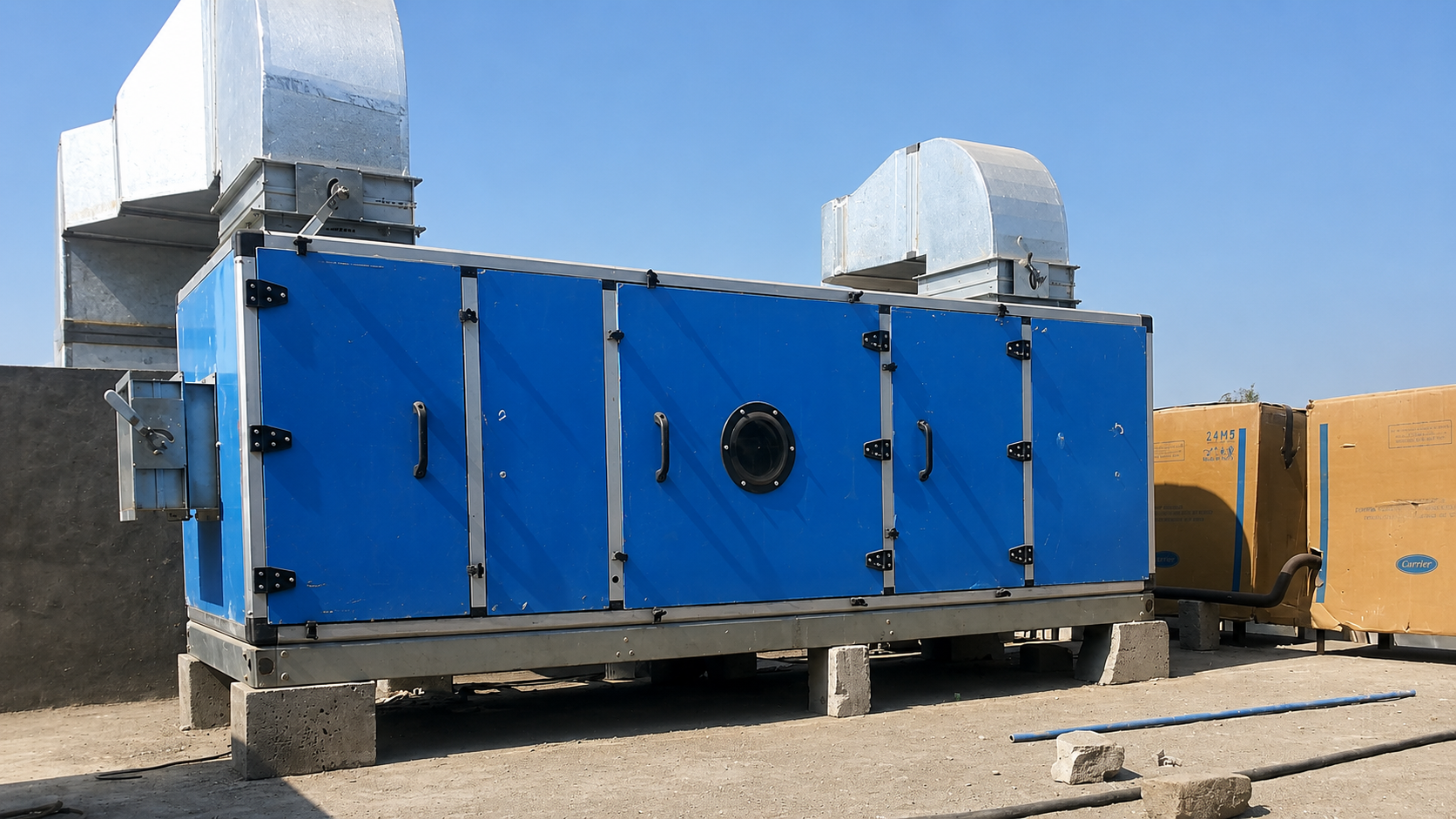
Airflow is what actually makes a cleanroom a cleanroom. Panels and doors create the enclosure, but the HVAC system, the air handling units, ducting, filtration, and dampers, establishes and holds the pressure cascade, air change rate, and particle count the space is built to maintain. A well-built room with an undersized or poorly configured HVAC system will never hold its classification, regardless of how good the walls and floor are.Skan Inc designs and supplies HVAC systems for cleanrooms, pharmaceutical facilities, and modular OTs, covering air handling units, laminar airflow systems, and the ducting and distribution components that connect them. Some components are manufactured in-house; others, such as certain dampers, or specialised filter media, are sourced through established supplier relationships and integrated as part of the system we deliver.
Select a tab below to explore the available products
An AHU's specification is really three separate decisions made together, not three alternative products. Casing construction, cooling mechanism, and airflow type are each chosen independently based on what the room needs. Double skin, thermal break casings are now the standard specification for pharma and cleanroom AHUs, since a single-skin casing is more prone to sweating and energy loss. DX units are practical where a facility has no chilled water infrastructure, since they carry their own refrigerant circuit and don't depend on a central plant. FAHUs are specified specifically where a room's design calls for once-through ventilation rather than recirculation, such as certain isolation areas or spaces with a defined fresh air requirement independent of the rest of the facility.
| Core Type | Fire Behaviour | Weight / Cost |
|---|---|---|
| Casing construction | Double skin, thermal break | Standard for all pharma/cleanroom AHUs — prevents condensation a single-skin casing would allow |
| Cooling mechanism | DX (direct expansion) / Chilled water coil | DX: smaller sites, no chilled water plant. Chilled water: larger facilities drawing off a central plant |
| Airflow type | Recirculating / FAHU (100% fresh air) | FAHU: once-through ventilation, isolation areas, or a defined fresh air makeup independent of the main system |
LAF systems deliver a unidirectional stream of filtered air across a defined work zone, maintaining a consistently clean environment at the point where it matters most, a workbench or an entire operating field.
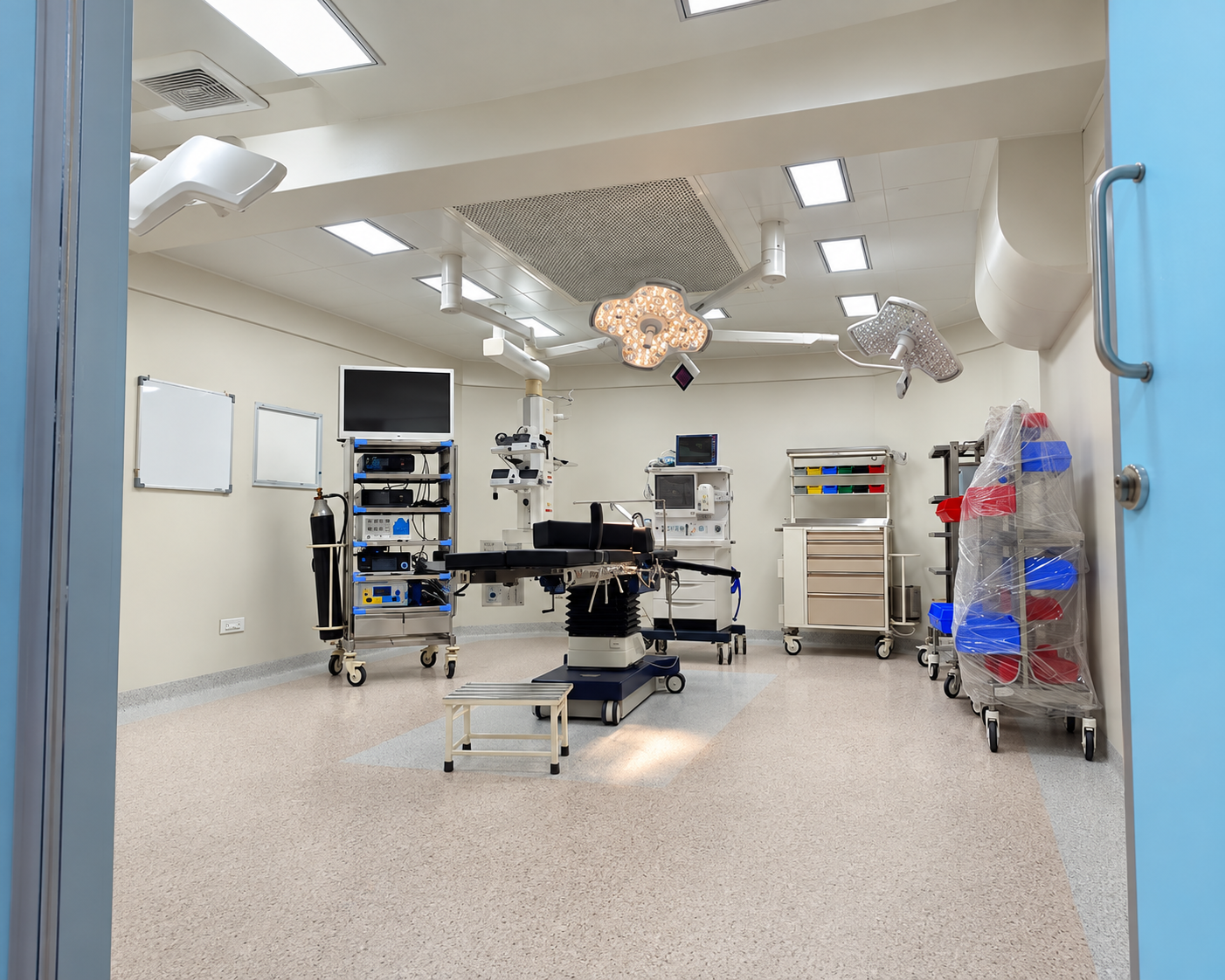
HEPA filtration for Modular OTs helps maintain a clean, controlled, and contamination-free surgical environment. It efficiently captures fine airborne particles, dust, and microorganisms while supporting consistent airflow. Designed for reliable performance, the system helps maintain required air quality standards within operation theatres.
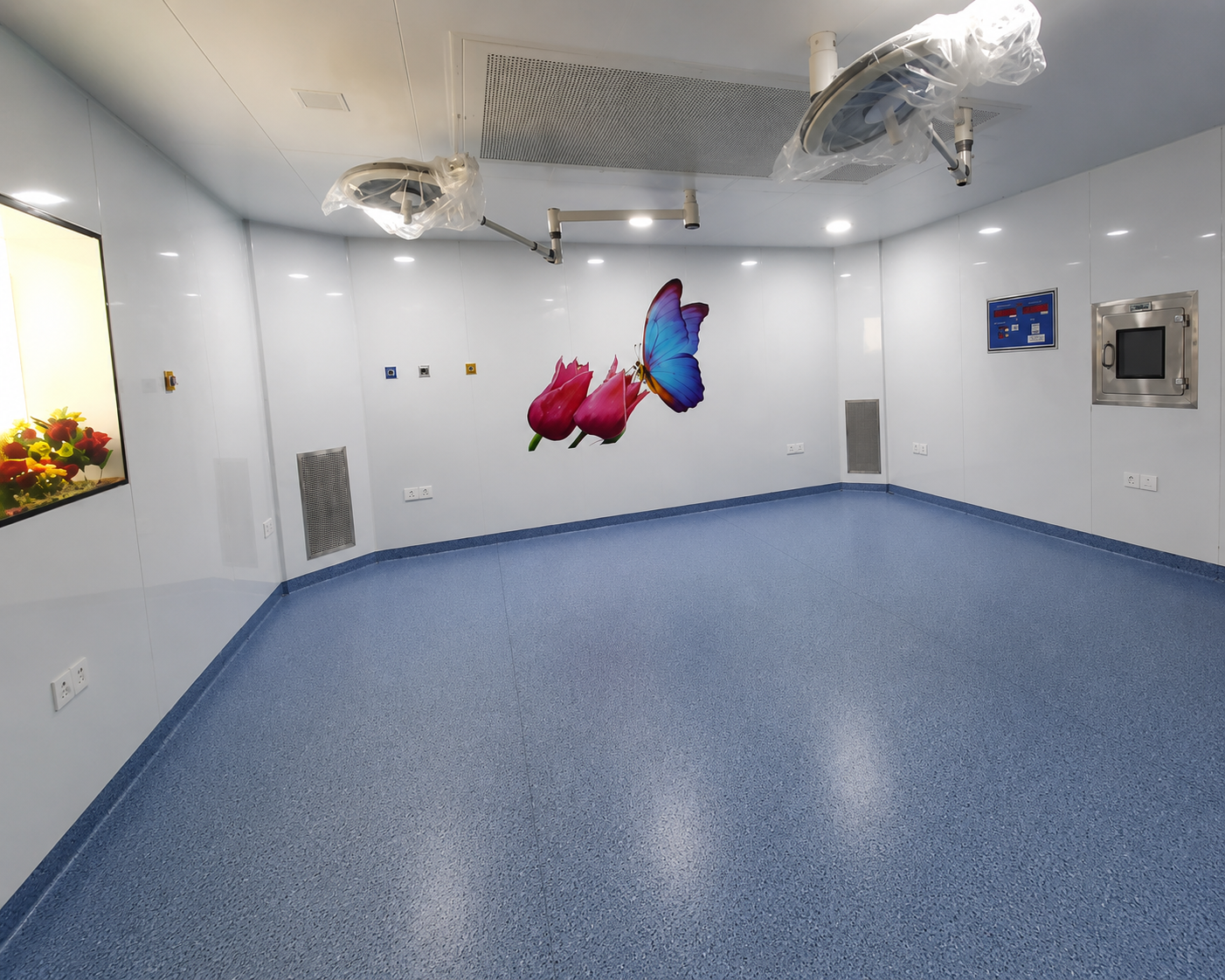
Same principle at a larger scale; the standard air delivery method over an operating table in a modular OT. Positioned directly above the surgical field, delivering continuous downward filtered airflow. Keeps the immediate surgical field cleaner than surrounding room air, even during an active procedure with staff movement nearby.
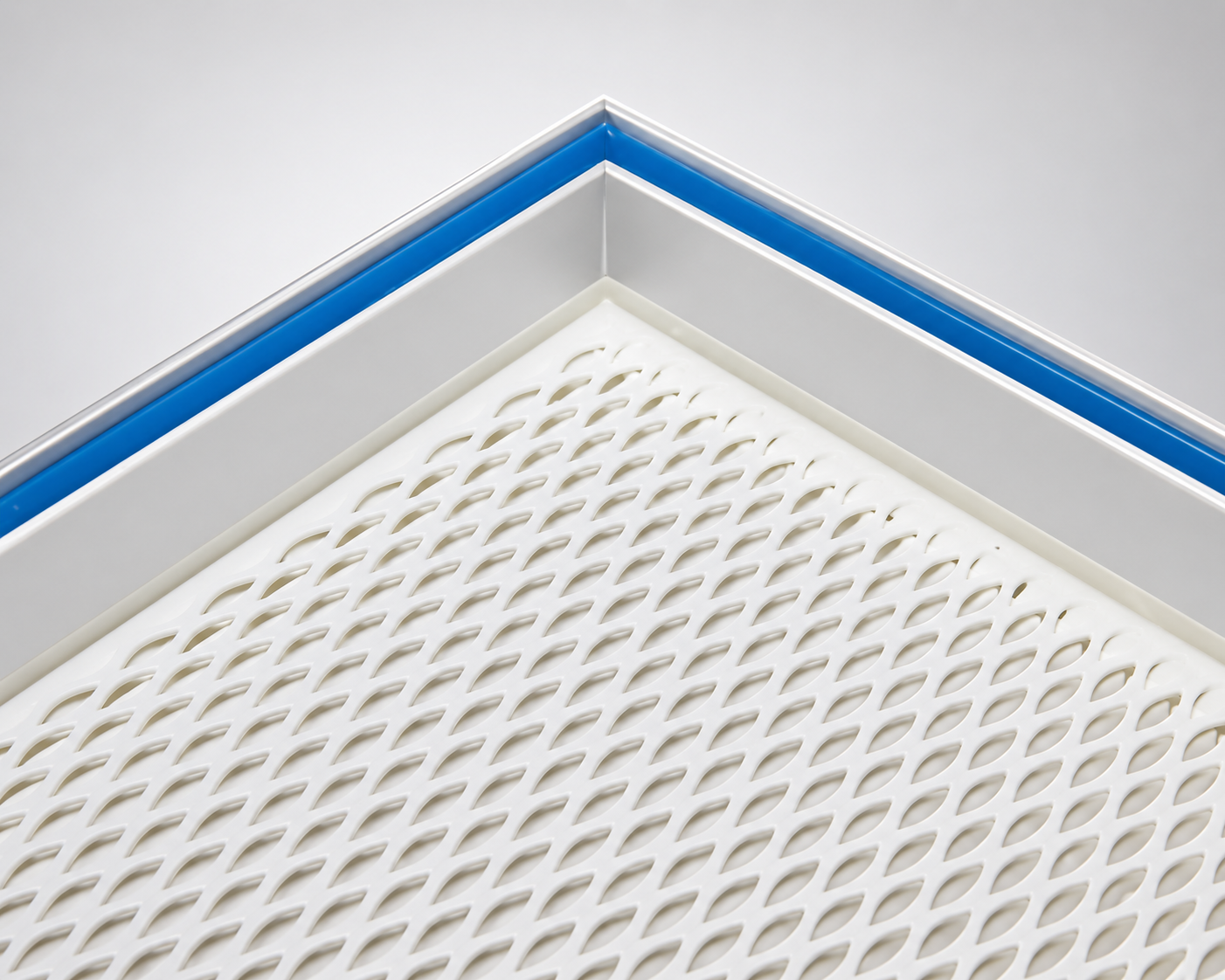
HEPA filter modules are the filtration component that makes both LAF systems above work, not a separate category of unit. Mini-pleat construction packs more filter media into a compact housing, increasing effective filtration area without increasing footprint, useful where space above the OT ceiling is limited. Gel seal closes the filter pack into its frame using a gel-filled channel the filter's knife-edges seat into, eliminating the gap air could otherwise bypass through. A HEPA filter is only as effective as its seal. Excellent filter media with a poor frame seal will still leak unfiltered air around its edges.
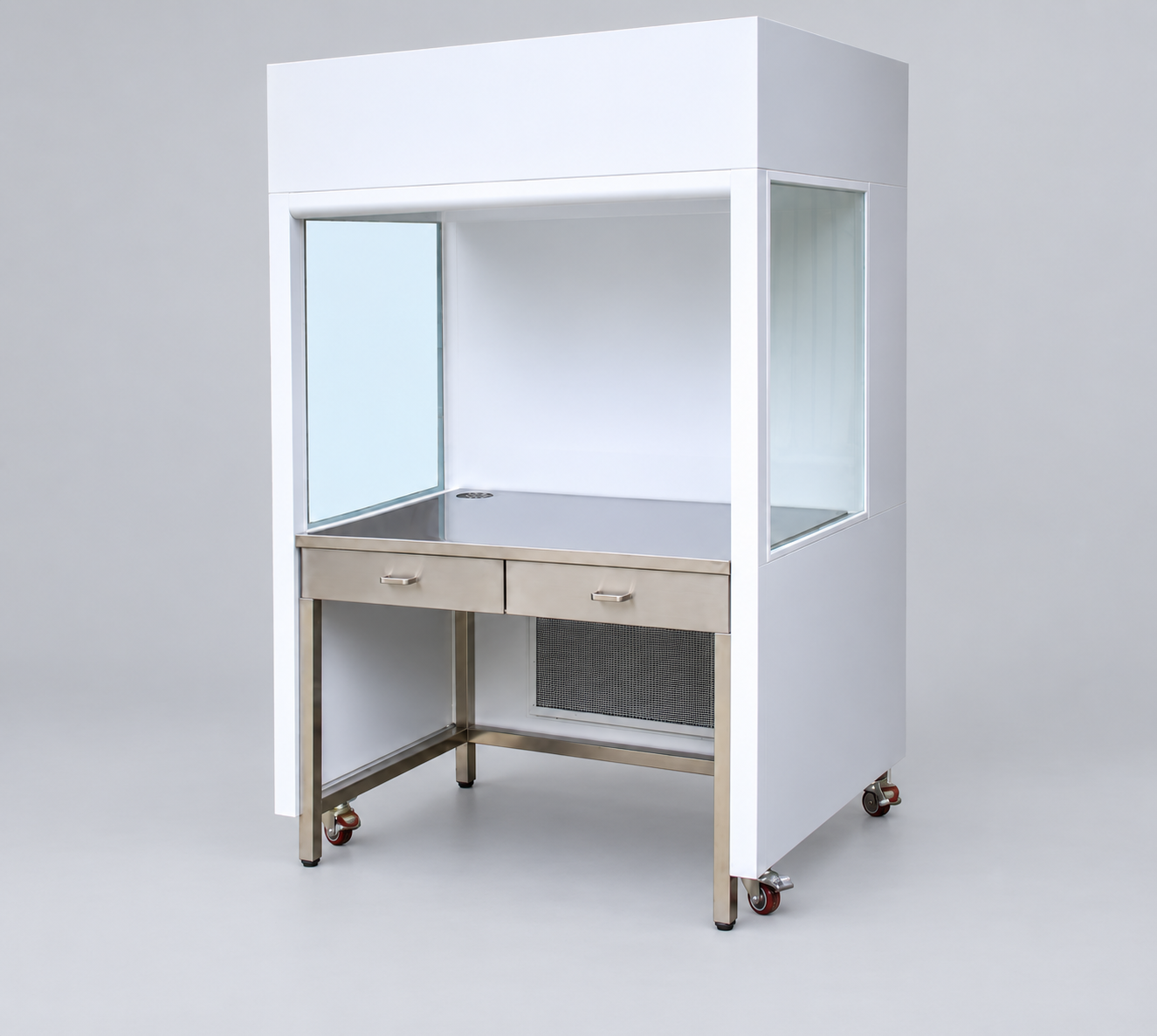
Used in laboratories and smaller cleanroom operations where a specific work area, not the whole room, needs a higher cleanliness standard. Air drawn through a HEPA filter at the top, delivered downward across the work surface in a steady, unidirectional stream. Keeps particles from settling on the process happening at the bench.
Getting conditioned, filtered air from the AHU to the room and back depends on distribution components that rarely get attention until one fails or is undersized.
Carries air between the AHU and terminal outlets in the cleanroom or OT. Choice between galvanised iron and aluminium comes down to weight, cost, and corrosion exposure. Aluminium is the lighter option where weight matters for installation or structural reasons.
Used where the airstream carries corrosive fumes or the environment itself is corrosive. Fibre-reinforced plastic resists chemical attack that would degrade GI or aluminium over time. More common in specific pharmaceutical fume extraction than general supply/return ductwork.
Regulate airflow quantity through a duct section. Balance the system so each room or zone gets the airflow it was designed for, rather than air following the path of least resistance.
Installed where ductwork passes through fire-rated walls or floors. Close automatically on fire or smoke detection, stopping flame and smoke travelling through the duct network. A life safety component as much as an HVAC one; placement is typically dictated by the building's fire safety design.
Carry air back from the room to the AHU, completing the airflow loop. Sizing and placement affect how evenly a room's pressure and airflow pattern hold up in practice. Poorly placed risers are a common reason a room fails to hold its intended pressure cascade, even with a correctly sized AHU.
DX units make sense where there's no existing chilled water plant, since they're self-contained. If the facility already has a central chilled water plant, a chilled water coil AHU is generally the more efficient option at scale.
A Fresh Air Handling Unit handles only outside air, with no recirculation. It's specified where a room's design calls for once-through ventilation, such as isolation areas or spaces with a fresh air requirement kept independent of the rest of the facility's recirculating system.
A vertical bench suits a defined work area within a lab or smaller cleanroom. Ceiling suspended LAF is the standard choice for an OT, where the entire surgical field, not just a bench, needs continuous filtered airflow from above.
Filter media only stops particles that actually pass through it. A gap at the frame lets air bypass the media entirely, regardless of how fine the filter grade is. Gel seal construction is what closes that gap.